Slow Starts, Soft Brushes: The First Ninety Days With a Newly Adopted Dog

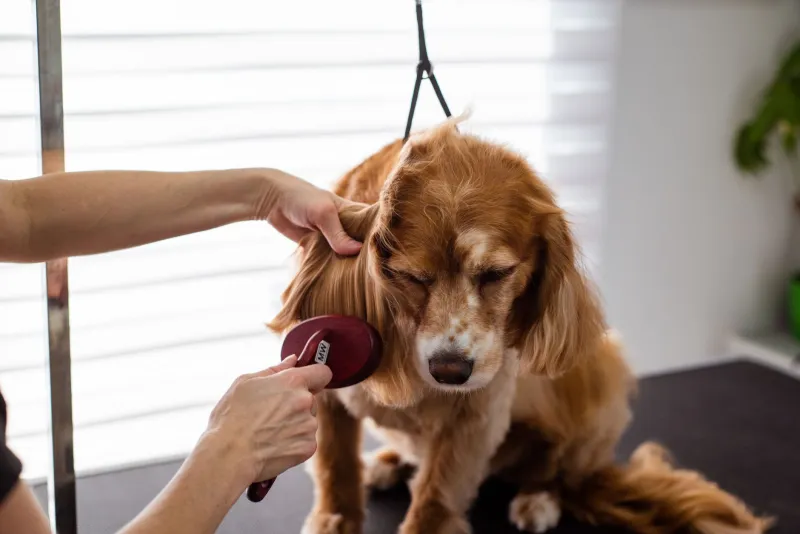
Photo: newly adopted rescue dog gentle grooming at home UK calm, via c8.alamy.com
A newly adopted dog arrives with a coat, a history and a lot of unknowns. The coat might be matted behind the ears, thin over the hips or carrying the smell of kennels. The history might be patchy. What matters most in the first few months is not a tidy finish. It is helping the dog learn that being touched, brushed and handled is safe. A show-ring look can wait.
Vet First, Groomer Second
Before booking a full groom, book a vet check if the rescue has not already arranged one. A vet can flag skin irritation, ear problems, parasites, dental pain or stiffness that would make grooming uncomfortable. They can also tell you whether an urgent groom is needed for welfare reasons or whether the coat can wait while the dog settles.
Ask the rescue or previous owner for any coat history: known allergies, previous clips, shampoo reactions, matting, or handling worries. Write it down. If the dog has an untreated skin condition, a good groomer will want that addressed first rather than working over sore skin. Grooming is not a substitute for veterinary care, and a welfare-first salon will say so.
Build a Touch Map at Home
Before the salon, build a picture of what your dog can tolerate. Keep sessions short, perhaps 60 to 90 seconds, and pair them with something good: a treat, a meal, a quiet scratch under the chin. Start with easy areas such as the shoulder or the side of the neck. Move slowly towards the collar, ears, paws and tail only when the dog stays relaxed.
Use the back of your hand and a soft towel before you introduce a brush. Let the dog sniff the tool. Touch for a moment, then pause and see what happens. If the dog leans in, carry on. If they freeze, tuck their tail, yawn repeatedly or move away, stop. That is not failure. It is information. A simple note on your phone, such as tolerates left paw, unsure about ears, can be genuinely useful to a groomer.
Read the Coat You Actually Have
Rescue dogs often come with coat guesses rather than facts. A dog described as a terrier cross may have a coat that needs stripping, clipping or very little help at all. Breed labels are useful, but the coat in front of you matters more. Look for mats behind the ears, under the collar, in the armpits and around the tail. Run your fingers through the coat gently. If you meet a solid knot, do not reach for scissors. Cutting close to the skin is a common home accident, especially with anxious dogs that move suddenly.
Avoid a full bath in the first week unless the vet or rescue advises it. Bathing a matted coat can make knots tighter. If the dog is heavily matted, ask a groomer or vet to assess the kindest option. In some cases, a short hygiene clip is more comfortable than hours of dematting. That is a welfare decision, not a style choice.
Find a Groomer Who Asks Better Questions
In the UK, dog grooming is not regulated in the same way as veterinary medicine, so ask questions. Look for a groomer with experience of rescue dogs, anxious dogs or dogs with unknown handling histories. Qualifications such as City & Guilds or iPET Network awards are helpful, but attitude matters just as much. A good groomer will ask about vet checks, touch tolerances, treats and what happens when the dog has had enough.
Ask whether you can visit for a meet-and-greet without a full groom. Many salons offer a quiet introduction, a treat and a look around. Ask about one-to-one appointments, drying methods, breaks and whether the dog will be crated. None of these questions are fussy. They are practical. A salon that welcomes them is usually a salon that listens.
The First Appointment Is a Conversation
Bring notes: the touch map, vet history, rescue background and any food or treat preferences. Arrive with time to spare, because rushing raises everyone's stress. The first appointment might be a bath and a tidy rather than a full clip. It might be a fifteen-minute handling session. It might end early. All of those can be successful first visits if the dog leaves calmer than they arrived.
Do not expect the groomer to fix months of unknown history in one appointment. Ask what went well, what was tricky and what to practise at home. Book the next visit only when the plan makes sense for the dog, not because the diary looks empty.
Know When to Pause
Watch for the quiet signs: yawning, lip licking, turning away, freezing, tucked tail, sudden scratching or a hard stare. A skilled groomer will pause before those signs become a snap or a scramble. If your dog needs veterinary sedation for routine grooming, discuss it with your vet rather than assuming it is the only answer. Sometimes a different approach, a shorter appointment or a quieter salon solves the problem.
A Realistic First Three Months
In the first two weeks, focus on vet checks, settling in and gentle touch at home. Weeks three and four can include a meet-and-greet with a groomer. Weeks five to eight might bring a first bath or tidy. By weeks nine to twelve, many dogs can begin a proper grooming rhythm, often every four to six weeks depending on coat type. Some will need longer. That is fine.
The goal is not a perfect coat by the end of the first season. It is a dog who can be handled without fear, a coat that is healthy and a groomer who knows the dog's limits. Slow starts and soft brushes build the kind of trust that lasts far longer than a neat finish.