The Two-Minute Briefing: Small Notes That Reshape Your Dog's Groom
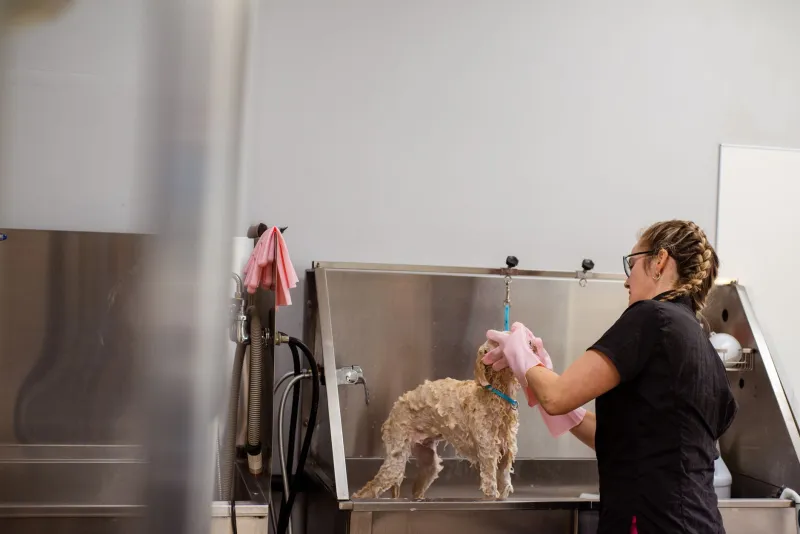
Drop-off is rarely the calm, clipped conversation we imagine. You're juggling a lead, a parking ticket, a dog who has just spotted a spaniel across the road, and a groomer with a clipboard. It's easy to hand over the dog and hope for the best. But the two minutes you spend passing on a few small details can reshape the entire groom — not because we need your dog's life story, but because coat work and handling go better when we know what's changed since last time.
Below is the short briefing we find genuinely useful. It's not a medical form. It's the stuff that helps us choose a brush, adjust a dryer, take a break, or ring you before we make a decision you'd rather make together.
Start with the skin, not the style
We can see the coat. We can't see what happened three days ago. If your dog has a new graze from a hedge, a patch of redness under a harness, a lump you've noticed while drying paws, or a spot of itching that's appeared since Bonfire Night, say so. Skin changes alter the plan: we might skip a bath, use a different shampoo, work around a tender area, or leave a clip slightly longer than usual.
This matters especially in November. Wet walks, gritty pavements and central heating can all leave skin feeling sensitive. A quick note like 'redness under front legs since Tuesday' is more useful than a full allergy history we can't act on at the door.
Mention medication and mobility
If your dog is on anything — ear drops, pain relief, anti-itch tablets, even a supplement that makes them a bit drowsy — tell us. We don't need the dose, just whether it affects handling, balance or tolerance for standing. A dog on regular pain relief for stiff hips may need more frequent breaks on the table. A dog on ear medication may not want their ears touched at all today.
Mobility notes are just as important. Arthritis, a recent limp, a sore shoulder from a clumsy landing in the park: all of it changes how we lift, position and restrain. If your dog can't do stairs, we'll use the ramp. If they hate being picked up, we'll take it slowly. Small adjustments, better groom.
Share the handling quirks — and the things that help
Every dog has a list. Sensitive paws. Ear shy. Not keen on the dryer. Fine with clippers but hates the scissors near the eyes. Will settle with a lick mat but not with a towel. These aren't complaints; they're the manual. The more we know, the less we have to guess while your dog is standing on a table wondering why a stranger is waving a nozzle at them.
It helps to mention what works, too. 'She'll give you a paw if you ask.' 'He loves a bit of liver paste.' 'She settles if you count out loud.' These tiny details build trust faster than any treat bowl.
The winter-walk reality check
By November, most coats are carrying a little extra: mud in the feathering, salt on the undercarriage, burrs in the tail, and that damp-dog smell that no amount of air freshener quite covers. Tell us where the mud lives. If your dog has been wading through a muddy field every morning, we'd rather know before we start brushing, because wet mud acts like sandpaper between the coat and the comb.
Also flag anything that's rubbing. A harness strap that's started to leave a mark, a coat that's too tight under the armpits, a new collar that's caught the fur. We can often adjust the clip around it or suggest a different grooming rhythm until it heals.
First-timers, seniors and anxious dogs
If this is your dog's first salon visit, say so at the door. We'll build in extra time, keep the session shorter, and skip anything that isn't essential. Puppies don't need a full groom on day one; they need to learn that the table, the dryer and the treats are not alarming.
For anxious dogs, the most useful line is often 'he's worried about the dryer' or 'she doesn't like people reaching over her head'. That changes where we start, how we approach, and whether we use a happy hood or a quieter dryer. It also gives us permission to stop and let your dog settle rather than pushing through.
Senior dogs deserve their own note. Tell us if they're slower on their feet, if they need a mat rather than a table, or if they've started sleeping more and standing less. We can work in shorter bursts, use a warmer towel, and make sure the whole visit feels like a spa day rather than a marathon.
A simple handover template
Keep this by the door or screenshot it in your phone. It takes two minutes and saves a lot of second-guessing.
- Name, age, breed (or best guess, if they're a lovely mix)
- Skin: new lumps, grazes, redness, itching, recent clip or operation site
- Medication: what, when, and whether it affects handling
- Mobility: arthritis, sore hips, recent injury, lifting or stairs preferences
- Handling: sensitive paws, ear shyness, dryer worries, favourite distractions
- Coat: last bath, products used, matting spots you've noticed
- Season: mud, salt, burrs, harness rub, recent fireworks anxiety
- Contact: best number and your vet's details
You don't need to fill every line. A quick text, an email before the appointment, or a handwritten note handed over with the lead all work. If you'd rather talk it through, arrive five minutes early and we'll listen properly — no rush, no judgement.
The small notes that make the biggest difference
The best handovers are honest and short. They don't need to be polished. A scribbled 'sore paw, please avoid, loves a cuddle' tells us more than a perfectly formatted paragraph about coat theory. We're not assessing you. We're building a plan.
And if you forget something at the door, ring us. We'd much rather hear 'actually, she's been licking her back leg since Friday' before the clippers come out than discover it halfway through. Happy dogs, healthy coats — it usually starts with a quick chat and a few useful words.