The Mineral Hangover: What Your Dog's Coat Is Carrying Home From Bath Time
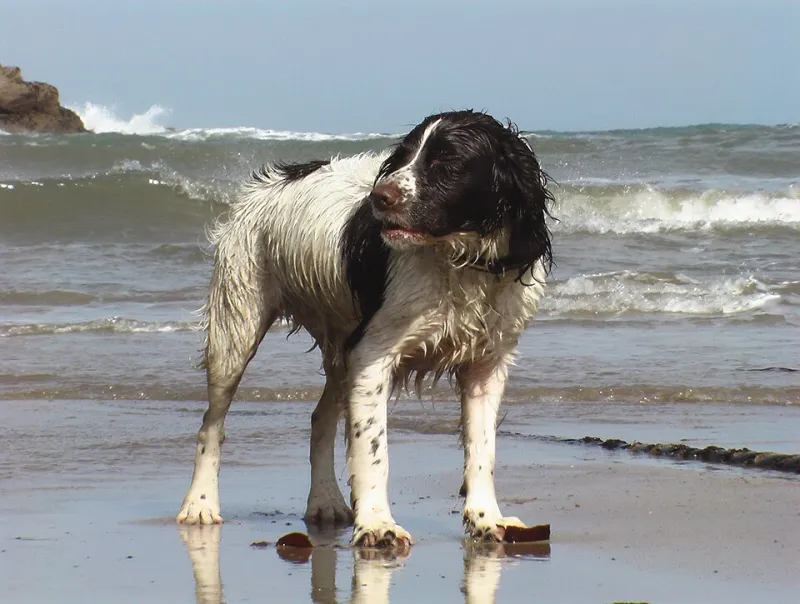
Photo: Ashley Coates from Bristol, United Kingdom, CC BY-SA 2.0, via Wikimedia Commons
There is a particular kind of disappointment that comes from giving your dog a thorough bath, drying them beautifully, and then noticing a day or two later that the coat already looks a bit… meh. Not filthy. Not matted. Just slightly flat, slightly stiff, slightly less shiny than you expected. If that sounds familiar, your shampoo may not be the culprit. Your water might be.
In lots of UK homes, the water that comes out of the tap is carrying dissolved minerals, mainly calcium and magnesium. That is what makes it hard water. It is perfectly safe for dogs to drink and bathe in, and it is not a crisis. But those minerals can leave a faint film behind on hair and skin once the water evaporates. Think about the inside of your kettle. Now imagine a much gentler version of that happening on a coat. That is the mineral hangover.
The clues are often small
Hard water does not usually announce itself with a dramatic problem. It shows up in small, annoying ways. The coat may feel rougher than usual after drying, or slightly tacky in patches. Pale dogs can look a little chalky. Dark coats can seem less glossy, as if someone turned the shine down by ten per cent. You might notice white flecks or a powdery look near the roots, especially behind the ears or along the back where rinsing is easy to rush.
Skin can tell a story too. Some dogs seem a bit itchier or their skin feels tighter after a bath in very hard water. That does not mean every scratch is down to the water supply, and it is always worth checking with your vet if irritation is persistent. But if the timing lines up with bath days, it is a sensible thing to consider.
There is also the shampoo clue. If your dog's shampoo seems to need twice as much product to get a decent lather, or if the rinsed coat still feels a bit slick no matter how long you spend with the shower head, hard water may be making the job harder. Soap and hard-water minerals are not great friends. They can form a sort of scum that clings rather than rinses cleanly away.
Check before you blame the bottle
Before you buy a cupboard full of new products, do a quick local check. Water hardness varies enormously across the UK. Parts of London, East Anglia, the South East and the Midlands often sit in harder-water zones, while some northern and western areas are softer. Your water supplier's website usually has a postcode checker that tells you the general hardness in your area. It is not a precise laboratory test of your bathroom tap, but it is a useful starting point.
Your kettle is another low-tech clue. If it scales up quickly, your water is likely on the hard side. If you already use a descaling routine for the kettle and the shower head, your dog's coat is living with the same minerals.
This matters because the fix is not always about buying a specialist shampoo. Sometimes it is about changing how you rinse, how much product you use, and how thoroughly you dry. Small adjustments often make a bigger difference than an expensive bottle.
Rinse like you mean it
The most useful habit in a hard-water home is a longer, more deliberate rinse. Not a hotter rinse. Not a harder jet. Just a more patient one. Start by wetting the coat thoroughly before you apply shampoo. If the hair is already saturated with water, the shampoo has less work to do and you are less likely to use too much.
Dilute your shampoo in a jug or bottle with warm water before applying it. A little goes further, and it spreads more evenly through the coat. Work it into sections rather than dumping it all on the back and hoping for the best. Pay attention to the places that are easy to miss: armpits, groin, behind the ears, under the collar area and around the paws.
Then rinse, rinse, rinse. Use your fingers to lift the coat away from the skin so water can reach the undercoat. Start at the top and work downwards, and do not forget the belly and the backs of the legs. When you think you are finished, give the coat one more pass with clean water. A final rinse with filtered water or a jug of soft water is not essential, but some owners find it helps, especially on small dogs or dogs with sensitive skin.
Choose products with a little common sense
You do not need to panic-buy a chelating shampoo or a full mineral-removal system. A gentle dog-specific shampoo that suits your dog's coat type is still the right starting point. If you bathe often, or if your dog has a coat that already tends to dryness, ask your groomer whether a clarifying or hard-water-friendly option is worth trying. The key is not to strip the coat repeatedly in pursuit of squeaky-clean. Squeaky is not actually the goal. Comfortable and balanced is.
Avoid human shampoo, especially in hard-water areas. It can be harsher on a dog's skin and may leave its own residue behind. If you are unsure what suits your dog, bring the question to your next appointment. A groomer who sees your dog's coat regularly can usually tell whether the issue looks like product build-up, mineral film or something else entirely.
Drying and brushing matter too
Hard-water residue is left behind when water evaporates. That makes drying more important than it sometimes gets credit for. Towel-dry gently, then use a cool hairdryer on a low setting if your dog is comfortable with it. Keep the dryer moving and check the skin with your hand so you do not overheat anyone. A thoroughly dry coat is less likely to hold onto that stiff, filmy feeling.
Once dry, give the coat a quick brush to lift any lingering residue and spread natural oils. Do not attack knots with force. If you find a tangle, work it out slowly with your fingers and a comb. A calm five minutes after bath time is far better than a rushed grooming session later.
A small shift, not a big overhaul
Hard water is one of those background annoyances that is easy to ignore and surprisingly satisfying to manage. You do not need to install a whole-house filtration system to see a difference. Start with a postcode check, a more generous rinse, a diluted shampoo and a proper dry. Keep an eye on how the coat feels over the next few baths. If it still seems dull, tight or irritated, have a chat with your vet or groomer rather than layering on more products.
A healthy coat does not need to be show-ring glossy every day. It needs to be clean, comfortable and cared for. If your water is leaving a little mineral hangover behind, a few calmer rinses and a smarter drying routine can help your dog walk away from bath time feeling soft, fresh and a lot more like themselves.