The Dry-Air Effect: Keeping Your Dog's Coat Happy When the Heating Comes On
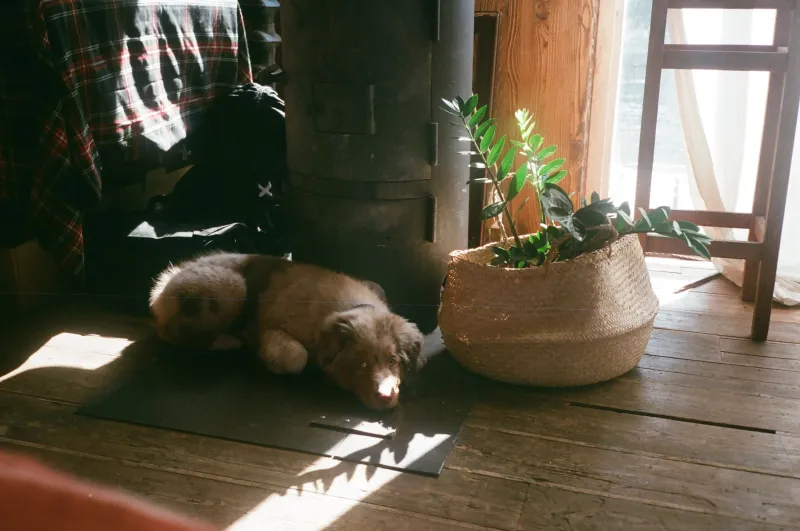
There is a particular November moment in British homes: the evenings draw in, the radiators begin their soft clanking, and suddenly the dog bed beside the boiler feels less like a perch and more like a hotspot. It is cosy, of course. But central heating does quiet, persistent things to a dog's coat, and many owners spot the results weeks later: a spikier brush, a sprinkling of white flakes, a sudden static halo, or a knot behind the ear that wasn't there last week.
The good news is that you don't need a laboratory or a complicated routine. You need a bit of awareness and a gentle plan that fits around muddy walks, school runs and the kettle boiling.
Why warmth changes the coat
A dog's coat works best when the air around it is reasonably balanced. Central heating lowers indoor humidity, and that dry air pulls moisture from skin and hair. Add a waterproof coat, a warm harness or a duvet-heavy bed, and you have conditions where static builds, skin gets itchy, and undercoat loosens without necessarily falling out neatly. Some dogs then shed in odd drifts rather than a steady trickle.
It is not that heating is bad. It is simply that the indoor environment changes quickly, and the coat has to adapt. The aim is to soften that transition rather than fight it.
The static and the shed
If your dog's coat crackles when you brush it, or the hair stands up in strange directions after a nap, static is likely part of the picture. Dry indoor air makes it worse. A light mist of plain water on your hands before you stroke or brush can help, and a humidifier in the main living room can take the edge off without turning the place into a spa.
Shedding is the other signal. When the heating comes on, some dogs drop coat in response to the warmer indoor air, even if the weather outside is still cold. Regular, short brushing sessions are more useful than one long marathon. A few minutes every other day will catch loosening hair before it migrates into corners, car seats and your favourite jumper.
A room-by-room approach
Hallway: the wet-zone buffer
The hallway is where the weather enters the house, so treat it as a buffer rather than a grooming room. Keep a towel by the door, a shallow tray for damp leads, and a simple routine: paws wiped, coat shaken out, harness hung up to dry. If the radiator in the hall is always on, pop a dog bed a little further away so your dog isn't parked against a hot surface after a wet walk. A coat that is drying too quickly next to a radiator can feel stiff and brittle, and the mud has a habit of setting in.
Living room: radiator etiquette
Dogs are excellent at finding the warmest spot in any room, but they don't always choose the best one for their skin. If your dog loves to lean against the radiator, create a nearby alternative: a bed or blanket just out of direct heat. You don't have to move the furniture around. Simply give them a comfortable option that is warm without being hot.
This is also the room where static tends to show up. If your dog's coat looks like it has been inflated after a nap, a quick stroke with slightly damp hands and a few minutes with a soft brush can settle it back down.
Bedroom: bedding and airflow
A dog that sleeps in a warm bedroom may spend eight hours pressed into synthetic bedding with little air moving around the coat. That is a recipe for matting behind the ears, under the collar and around the armpits. Wash bedding regularly, choose breathable covers where you can, and check the sleeping spot for trapped heat. A dog doesn't need a duvet and a radiator and a thick mattress all at once.
Bathroom: the humidity valve
Bathrooms are naturally more humid, which makes them useful during heating season. If your dog likes to follow you in, a few minutes on a dry towel while the room is steamy can help loosen a dry coat. Don't leave a damp dog in a warm bathroom for long, though. The aim is a little moisture in the air, not a sauna.
Brushing: timing matters more than elbow grease
Dry air makes hair more brittle, so brush with a light hand. A slicker brush used too firmly on a dry coat can scratch the skin and create breakage. Work in small sections, especially behind the ears, under the collar and along the tail. If you hit a knot, stop and use your fingers to tease it apart rather than dragging the brush through.
A quick daily once-over is often more effective than a weekly deep groom. Run your hands over the coat after a walk: check the ears, the armpits, the back of the legs and the base of the tail. Warm, slightly tacky skin or a sudden crop of small knots is your cue to act early.
Bathing in heating season
Bathing can be helpful, but timing matters. A dog that is bathed and then sits beside a radiator may end up with a dry, tight coat. Use a dog-specific shampoo, rinse thoroughly, and dry gently with a towel before letting your dog settle somewhere warm but not hot. If your dog has dry skin, don't over-bath. A bath every few weeks is plenty for many dogs unless they have rolled in something memorable.
Mats behind the ears
This is the classic heating-season trouble spot. The ears trap warmth and moisture, and a collar or harness adds friction. Check behind the ears every couple of days. If the hair is starting to clump, tease it apart with your fingers before it tightens. A tiny amount of detangling spray on your hands, not directly on the skin, can make the job easier.
The practical checklist
- Keep dog beds a sensible distance from radiators.
- Add a little humidity to the main living space if the air feels very dry.
- Brush little and often, with a light touch.
- Check behind the ears, under the collar and around the armpits every few days.
- Wash bedding regularly and choose breathable fabrics.
- Dry wet coats with a towel rather than direct heat.
- Bath less often and always use a dog-specific shampoo.
Central heating is part of British winter life, and there is no need to banish the dog from the warm spots. A few small adjustments will keep the coat comfortable, the skin calm and the brush gliding through without a crackle. Happy dog, healthy coat, and a home that still feels cosy.