Feathers, Mud and the Long-Legged Dog: A Wet-Weather Grooming Strategy
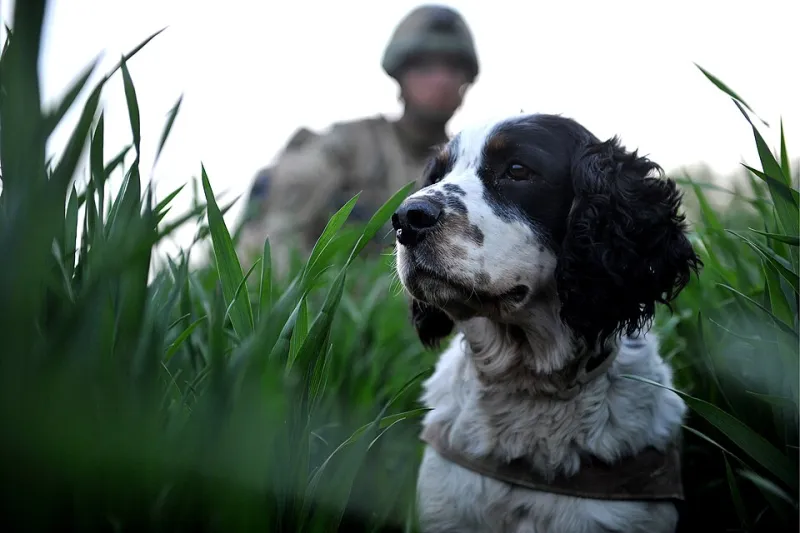
Photo: Sgt Rupert Frere RLC, OGL v1.0, via Wikimedia Commons
There is a particular moment in the British wet season when a spaniel’s ear feathering stops looking elegant and starts looking like a used mop. The chest frill collects woodland mud, the back-of-leg feathers turn into tiny dreadlocks, and every walk seems to end with a dog-shaped puddle on the kitchen floor. It is tempting to reach for the clippers and take the lot off. Please do not. Feathering is not decoration; it is part of how these dogs stay warm, shed water and move through cover. The trick is to work with it through the muddy months rather than declare war on it.
This is a breed-minded plan for spaniels, setters and any long-haired leg in your life. It is not about keeping every hair pristine. It is about keeping the coat comfortable, knot-free and able to do its job until the weather dries out again.
Start with the feather map
Before you buy another brush or book another appointment, get to know where your dog actually collects trouble. For most spaniels and setters, the danger zones are predictable: behind the ears, under the ear leathers, the chest frill, the backs of the front legs, the hock feathers and the tail. A Cocker Spaniel may collect a neat little mud bracelet around each paw. An English Setter may arrive home with a chest full of leaf litter and a fringe that has started to felt at the ends. A Working Cocker will find mud in places you did not know existed.
Run your hands over these areas after every wet walk, not just before a groom. You are checking for grit, small twigs and the first sign of a tangle. A knot that is caught early is a five-minute job with a comb. A knot that has been allowed to dry, tighten and collect more mud is a salon job, and sometimes a clip job. The feather map is simply knowing where to look first.
Dry smarter, not harder
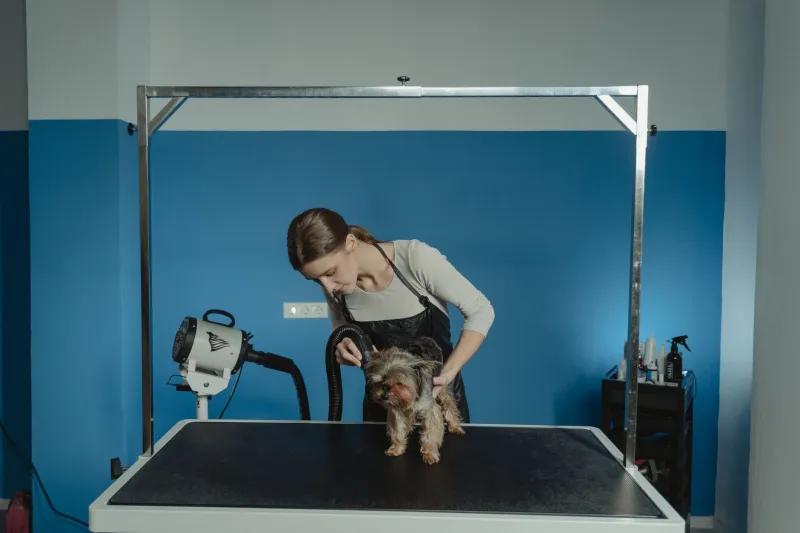
Most mud-season coat damage happens during drying. Rubbing a wet, feathered dog vigorously with a towel is a reliable way to create frizz, breakage and small mats. Instead, press and squeeze. Use a microfibre towel or a dedicated drying coat and work in sections, especially around the ears, chest and legs. If your dog will tolerate it, a cool hairdryer on the lowest setting can help finish the job, but keep it moving and keep it cool. Never trap damp feathering under a warm coat and send the dog back out.
For very wet walks, a drying coat is worth its weight in gold. Pop it on a damp dog after a towel-down and let it wick moisture away while you make a cup of tea. A quick blast with a cool dryer on the leg feathers before bed is often enough to stop overnight tangles. The goal is not a show-ring finish. It is a coat that is dry enough to comb through without pulling.
Knot prevention is a daily habit, not a salon event
Feathered coats do not need a huge arsenal, but they do need consistency. A metal comb is the honest tool here: it finds knots that a slicker brush glides over. Use it every couple of days on the ears, chest and leg feathers, working from the ends of the hair upwards rather than jabbing at the root. A light mist of dog-safe detangling spray can help, especially on setter chests and spaniel ears. If you meet a stubborn knot, use your fingers to gently tease it apart and never cut across the coat with household scissors. That is how coats end up with holes that take months to grow out.
Pay attention to the ears after wet walks. Damp ear leathers can rub against each other and create mats underneath, where you might not see them. Lift the ear, check the skin is dry and comb the feathering gently. If the ear canal itself looks red, sore or smelly, that is a vet conversation, not a grooming one.
Trimming choices: tidy, do not strip the coat’s job
There is a middle ground between a full shave-down and doing nothing. A professional tidy can remove the scraggly ends, shorten the worst of the leg feathering and open up the paw area without destroying the coat’s natural shape. For spaniels and setters, the aim is usually to keep the silhouette recognisable and the feathering functional. A hygiene trim around the rear and a neatening of the paw feathers can make a huge difference to mud management without leaving the dog looking scalped.
Be wary of shaving a double coat or taking clippers too far up the legs. It can change how the coat grows back, alter its weather resistance and leave the dog colder in a British winter. If your groomer suggests a shorter clip for practical reasons, ask them to explain the trade-offs and agree on a plan that suits your dog’s coat type, lifestyle and how much brushing you can realistically do at home.
A realistic salon rhythm for mud season
In the wet months, a four-to-six-week tidy often works better than stretching to eight or ten weeks and then asking for a rescue mission. That does not mean a full groom every time. It might mean a bath, a blow-dry, a feathering tidy and a paw check. For very muddy dogs, a quick mid-cycle appointment can reset the coat before small knots become big ones.
Book your mud-season appointments early, especially in the run-up to Christmas and the darker weeks of late 2026. If your dog is elderly, anxious or new to grooming, ask for a quieter slot and a slower start. A good salon will work with the coat rather than against it, and they will tell you honestly if a mat needs a different approach.
The small kit that earns its place by the door
Keep a microfibre towel, a metal comb, a detangling spray and a drying coat near the door. Add a shallow basin of warm water for muddy paws and a stack of old towels for the floor. This is not about having the perfect grooming cupboard. It is about making the first five minutes after a walk easy enough that you actually do them. Small, repeated actions keep feathering comfortable through the worst of the weather.
At Smart Dog Salon, we see the difference between coats that are maintained little and often and coats that arrive in a single muddy block. Feathering is beautiful, but it is also high-maintenance in exactly the months when UK walks are at their wettest. A sensible plan, a gentle comb and a realistic appointment rhythm will get you and your long-legged dog to spring without the clippers coming out in frustration.