Curls With a Calendar: A Workable Grooming Rhythm for UK Cockapoos and Labradoodles

Photo: cockapoo curly dog being groomed in a professional dog salon UK, via images.fineartamerica.com
Curly crossbreeds have a lot going for them: friendly faces, bouncy walks and coats that look brilliant in photos. They also have a reputation problem. Somewhere between the puppy photos and the first muddy November walk, the phrase low-maintenance starts to feel like a small joke. A cockapoo, labradoodle, cavapoo or goldendoodle can have a wonderful coat, but it is not a coat that looks after itself. The good news is that a workable routine is not complicated. It just needs to be regular, honest and built around real UK weather.
Why the low-maintenance label causes trouble
Curly and wavy crosses vary enormously. One dog may have a looser, more open coat; another may have dense curls that trap tiny knots close to the skin. The label on the advert cannot tell you which one you have. Neither can a quick stroke in the park. What matters is what happens when you part the coat and look underneath.
That is where the trouble starts. A curly coat can look smooth on top while forming small tangles underneath. Those tangles tighten when they get wet, rub against a harness or sit damp after a walk. By the time they are visible, they may already be too close to the skin for a brush to solve comfortably. This is not a failure on the owner's part. It is simply how curly coats behave. The fix is not panic; it is rhythm.
The calendar starts between appointments
A grooming appointment is not a reset button that makes the next six weeks easy. It is one part of the plan. The rest happens at home, in short bursts. Think of it as a calendar with three layers: daily checks, weekly brushing and professional appointments. Daily checks can be as simple as running your hands over the dog while you are watching telly. Feel for warm spots, damp patches, little beads of knot behind the ears or under the collar. Weekly brushing is where the real work sits, but it does not need to be a marathon.
For many curly crosses, ten to fifteen minutes every other day is more useful than an hour-long session on Sunday. Little and often keeps the coat from developing hidden mats. If your dog is young, newly adopted or sensitive about handling, start with two minutes and build up. A calm two minutes is worth more than a stressful twenty.
Line brushing without the drama
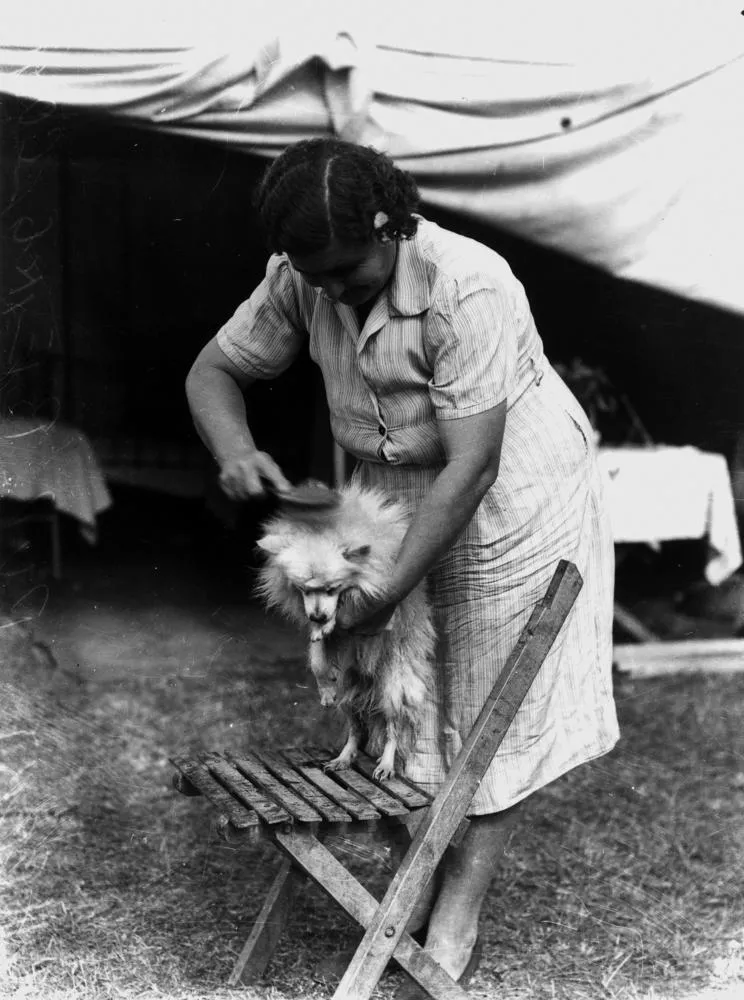
Line brushing is the phrase groomers use because it describes the job properly. You are not brushing the surface of the coat. You are working through it in sections, parting the hair and brushing from the roots outwards. Use a slicker brush or a comb that suits your dog's coat, and work in small sections. Start somewhere easy, like a shoulder or a back leg, and keep one hand gently holding the coat so you can feel when the brush is catching.
Do not tug at a knot. If the comb stops, go back to the surface and work the section into smaller pieces. A detangling spray can help, but it is not a substitute for working through the coat. If you find a mat that will not budge, stop and note where it is. Your groomer can advise. Cutting it out at home is often a false economy, especially near ears, armpits and the tail.
Booking intervals that fit real life
There is no single correct interval for every curly cross. Many UK groomers see curly-coated dogs every four to eight weeks, depending on coat type, lifestyle, length and how much home brushing is realistic. A dog who swims in the sea, rolls in mud and wears a harness for long walks may need a tighter schedule than a dog who prefers dry pavements and a warm sofa. A dog in a longer scissored style will usually need more frequent visits than one in a shorter, practical clip.
Book the next appointment before you leave the salon. That sounds small, but it removes the mental load. It also means you are not ringing round in a panic when the diary is full. If you are unsure whether four weeks or eight weeks suits your dog, ask your groomer to show you what to check at home. A good groomer will happily explain the difference between a coat that is ready for a tidy and a coat that is already overdue.
Wet walks, mud and the drying habit
UK weather does curly coats no favours. Damp is the enemy of a smooth coat because it lets small tangles tighten. After a wet walk, do not just rub the dog with a towel and send them to bed. Pay attention to the areas that stay wet longest: paws, lower legs, under the ears, the chest, the belly and anywhere a harness sits. Towel dry thoroughly, then let the dog finish off in a warm room. If you use a dog dryer, keep it on a cool or low setting and move it constantly. Never trap a damp, curly coat under a winter coat for hours.
Mud is easier to manage if you deal with it before it dries. A bowl of lukewarm water and a towel by the door can save a lot of coat trouble. For muddy paws, rinse and dry rather than rubbing hard. For harness areas, check after every wet walk. That little strap line is a classic hiding place for a knot.
What to ask before you book
A good grooming relationship starts with questions, and none of them are silly. Ask what coat type your dog has and what length is realistic for your lifestyle. Ask how often your groomer would expect to see your dog, and what you should be doing between visits. Ask what happens if a mat is found: will they shave it out, work around it, or stop and discuss options? Ask whether they use clippers, scissors or a combination, and what products they use on sensitive skin. If your dog is anxious, ask how they handle nervous dogs and whether a shorter appointment might help.
At Smart Dog Salon, we would rather have that conversation early than discover a hidden mat six weeks later. Curly coats are not a badge of failure or a test of perfect ownership. They are just coats with a job attached. Build the calendar, keep the checks gentle and book the next visit before life gets busy. Your dog gets a more comfortable groom, and you get fewer surprises in the brush.